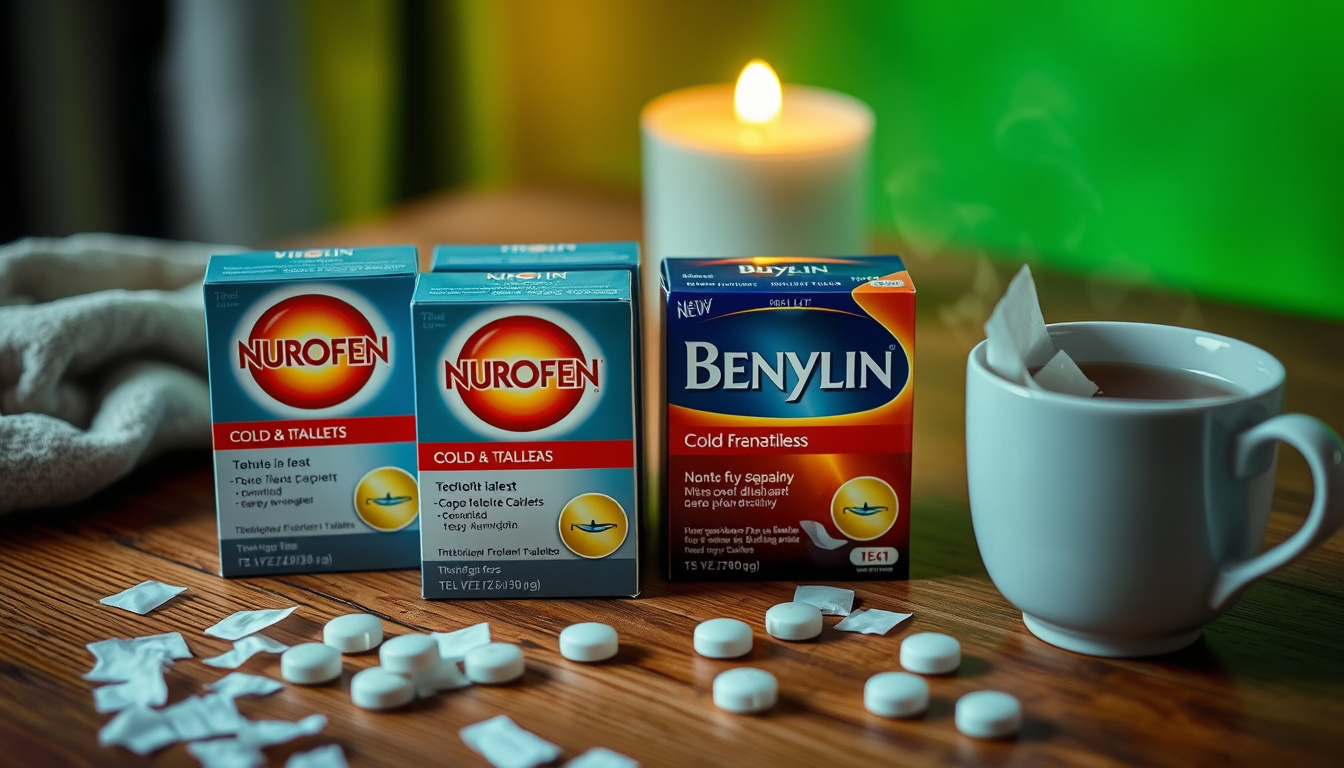

When a cold hits, most of us head straight to the pharmacy shelf. But if you’ve ever stood in an Irish pharmacy staring at Nurofen, Benylin, and Panadol boxes, wondering which one actually works best—you’re not alone. The good news is these tablets target different symptoms in ways that matter. The tricky part is knowing which combination matches your specific mix of congestion, fever, and body aches.
Top brands in Ireland: Nurofen, Benylin, Panadol · Common ingredients: Ibuprofen, pseudoephedrine · Key retailers: McCauley, Boots, Hickeys · Regulatory authority: HPRA
Quick snapshot
- Benylin 4Flu contains paracetamol 500mg, pseudoephedrine 22.5mg, diphenhydramine 12.5mg (Hickey’s Pharmacy)
- Paracetamol onset is 20–45 minutes; ibuprofen onset is 30–60 minutes (GoodRx)
- Whether Benylin 4Flu remains actively marketed after HPRA withdrawal in September 2020
- No published head-to-head clinical trials comparing efficacy across brands
- Symptom-matching guides from pharmacies are replacing brand loyalty
- Non-drowsy formulations gaining share among working adults
| Product | Primary ingredient | Dosage | Key function |
|---|---|---|---|
| Benylin 4Flu Tablet | Paracetamol | 500mg | Fever, aches, pain |
| Benylin 4Flu Tablet | Pseudoephedrine HCl | 22.5mg | Nasal decongestion |
| Benylin 4Flu Tablet | Diphenhydramine HCl | 12.5mg | Sneezing, runny nose, drowsiness |
| Nurofen Cold & Flu | Ibuprofen | 200mg+ | Anti-inflammatory, pain, fever |
| Panadol Cold & Flu | Paracetamol | 500mg | Analgesic, antipyretic only |
| Benylin Day Tablet | Pseudoephedrine | 60mg | Daytime congestion relief |
| Benylin Night Tablet | Diphenhydramine | 25mg | Night-time sedation |
What is the best tablet for cold and flu?
There is no single “best” tablet—only the one that matches your symptoms. Hickey’s Pharmacy ranks Benylin 4Flu as its top cold and flu product because it tackles four main symptoms: fever, congestion, coughing, and body aches (Hickey’s Pharmacy). But that breadth comes with trade-offs: if you only have a headache and fever, a multi-symptom tablet delivers ingredients you don’t need.
Nurofen Cold & Flu Tablets
Nurofen uses ibuprofen as its active base—an NSAID that reduces inflammation alongside pain and fever (Murray’s Pharmacy). At McCauley Pharmacy in Ireland, a 24-tablet pack costs €14.50 (McCauley Pharmacy). The catch: Nurofen does not address congestion or coughing. If your nose is blocked, you will need a separate decongestant.
Benylin 4Flu Tablets
Benylin 4Flu combines three active ingredients: paracetamol for fever and pain, pseudoephedrine to constrict nasal blood vessels, and diphenhydramine to suppress sneezing and runny nose (Benylin Official). The trade-off is diphenhydramine—it causes drowsiness, making Benylin 4Flu unsuitable for daytime use if you need to stay alert. Hickey’s Pharmacy calls it “the all-rounder” (Hickey’s Pharmacy).
For congestion plus aches: Benylin 4Flu. For inflammation and sinus pressure: Nurofen. For fever and pain alone: Panadol or generic paracetamol. Never combine multiple paracetamol-containing products—overdose risk is real.
Panadol Cold and Flu Tablets
Panadol relies solely on paracetamol, making it purely analgesic and antipyretic—meaning it handles fever and aches but does nothing for nasal congestion (Murray’s Pharmacy). Panadol Night Tablets (20s) sell for €11.25 at McCauley Pharmacy and are a best-seller for nighttime symptom relief (McCauley Pharmacy). The absence of decongestants makes Panadol a safer choice if you have blood pressure concerns or are taking other medications.
Do cold and flu tablets actually help you get better?
Cold and flu tablets relieve symptoms—they do not cure the viral infection or shorten its duration. The CDC guidance on managing the common cold confirms that antibiotics are ineffective against viruses, and over-the-counter products simply make you more comfortable while your immune system does the work. Rest and hydration remain the primary interventions.
Symptom relief vs cure
Paracetamol and ibuprofen both reduce fever and ease body aches, but they work differently. Paracetamol acts on the brain’s heat-regulating centre; ibuprofen also suppresses inflammation at the site of discomfort (Sutherland Podiatry). For sinus pressure headaches specifically, ibuprofen’s anti-inflammatory properties give it an edge over paracetamol alone.
Evidence from CDC and Johns Hopkins
Johns Hopkins Medicine recommends matching your tablet choice to specific symptoms rather than taking a multi-symptom product indiscriminately. Their do’s and don’ts for easing cold symptoms include prioritising rest, staying hydrated, and using decongestants sparingly—no more than three days, as prolonged use can cause rebound congestion.
Pharmacy shelves in Ireland carry products from global brands making global claims. But the HPRA (Ireland’s medicines regulator) applies its own standards, and product availability can differ from what the packaging suggests.
What’s better, Lemsip or paracetamol?
Lemsip is essentially a branded paracetamol product with added decongestants—it contains paracetamol 500mg as its core, supplemented by pseudoephedrine in the multi-symptom versions. This means Lemsip’s advantage over plain paracetamol depends entirely on whether you need the decongestant component. If you have a blocked nose and sinus pressure, Lemsip does more. If you only have fever and aches, generic paracetamol costs less and carries no unnecessary ingredients.
Lemsip ingredients and claims
Lemsip’s formulation places it in the same category as Panadol Cold & Flu Relief—both paracetamol-based with optional decongestant. Murray’s Pharmacy guidance notes that paracetamol-based products are best for fever, body aches, and mild headaches but do not relieve nasal congestion unless combined with a decongestant (Murray’s Pharmacy). The Telegraph’s health experts have noted that for straightforward pain and fever relief, there is no clear clinical advantage to Lemsip over generic paracetamol—the difference is branding and price.
Paracetamol standalone
Plain paracetamol tablets (or generic equivalents) contain no decongestants, no antihistamines, and no anti-inflammatories. This simplicity has advantages: fewer side effects, no drowsiness, and no risk of interactions with decongestants. The trade-off is that paracetamol alone will not unblock your nose or stop a runny nose.
Expert Telegraph review
Expert reviews comparing multi-symptom cold products consistently find that the “best” choice depends on your exact symptom profile. No single product outperforms others across all metrics—the key is reading the label and matching active ingredients to what you actually feel.
Do not take Benylin 4Flu with other paracetamol-containing products to avoid accidental overdose. Check every cold/flu product’s label for paracetamol before combining (Cobh Pharmacy).
What’s the fastest way to get rid of a cold or flu?
There is no cure for a cold or flu virus—your body clears it through immune response, typically in 7–10 days for a cold and up to two weeks for flu. Tablets can make you feel better faster by managing symptoms, but they do not accelerate viral clearance. The fastest path to recovery combines rest, fluids, and symptom-matched medication.
Tablet combinations
For a multi-symptom cold, Murray’s Pharmacy recommends combining products by function: paracetamol or ibuprofen for fever and aches, pseudoephedrine for congestion, and guaifenesin (expectorant) for chesty coughs (Murray’s Pharmacy). Guaifenesin thins mucus in the airways, making it easier to clear—a function that ibuprofen and paracetamol do not provide (Benylin Official).
CDC management tips
The CDC’s cold management guidelines emphasise hydration, rest, and humidified air alongside OTC symptom relief. Their guidance explicitly cautions against antibiotics for viral colds and advises against overuse of topical or oral decongestants beyond three consecutive days.
Staying active with a cold may feel productive, but Johns Hopkins Medicine recommends prioritising rest—pushing through illness extends recovery time and increases the risk of secondary infections.
What are the worst things to do when you have a cold?
Some habits actively worsen cold symptoms or prolong illness. Common mistakes include taking antibiotics (which target bacteria, not viruses), overusing decongestant sprays (causing rebound congestion), and drinking alcohol while taking paracetamol-based products (increasing liver strain).
Avoid during cold season
Decongestant nasal sprays (like xylometazoline) provide fast relief but should not be used for more than 3–5 days. Prolonged use leads to rhinitis medicamentosa—a cycle of worsening congestion that requires medical intervention to break. Johns Hopkins Medicine specifically warns against this pattern in their cold management guidance.
Johns Hopkins do’s and don’ts
The Johns Hopkins cold management guidance recommends: stay home when symptomatic to rest and prevent transmission; drink warm fluids; use a humidifier; avoid smoking and alcohol. Their don’ts include: do not demand antibiotics from your doctor, do not skip rest to “power through,” and do not combine multiple multi-symptom products without checking ingredient overlap.
Benylin Four Flu’s HPRA licence was withdrawn on 01/09/2020—the product is not currently marketed and is available only through pharmacies on a case-by-case basis (HPRA). Always verify current availability at your local pharmacy.
Comparison: Ireland’s leading cold and flu tablets
Three brands dominate Irish pharmacy shelves, each taking a different approach to symptom relief. This comparison cuts through marketing language to show exactly what each product contains and who it suits.
| Feature | Nurofen Cold & Flu | Benylin 4Flu | Panadol Cold & Flu |
|---|---|---|---|
| Active base | Ibuprofen (NSAID) | Paracetamol | Paracetamol |
| Fever relief | Yes | Yes | Yes |
| Pain relief | Yes (anti-inflammatory) | Yes | Yes (analgesic only) |
| Congestion relief | No | Yes (pseudoephedrine) | No |
| Cough suppression | No | Partial (diphenhydramine) | No |
| Drowsiness risk | Low | High (night use only) | Low |
| Typical price (Ireland) | €14.50 / 24s | Varies by pharmacy | €11.25 / 20s |
| Best for | Sinus pressure, inflammation | Multi-symptom relief | Fever and aches alone |
The pattern is clear: no single product covers all bases. Nurofen wins on inflammation, Benylin wins on breadth, and Panadol wins on simplicity and safety for those with medication sensitivities.
Specification: Benylin product range in Ireland
Benylin offers several formulations in Ireland, each targeting different symptoms. Below is the specification breakdown for the most relevant products, drawn from official product information and Irish pharmacy listings.
| Product | Key active ingredients | Target symptoms | Availability |
|---|---|---|---|
| Benylin 4Flu Tablets | Paracetamol 500mg + pseudoephedrine 22.5mg + diphenhydramine 12.5mg | Fever, congestion, body aches, sneezing | Pharmacy-only (HPRA licence PPA1151/130/001) |
| Benylin Day & Night Tablets | Day: paracetamol 500mg + pseudoephedrine 60mg; Night: paracetamol 500mg + diphenhydramine 25mg | Day: non-drowsy relief; Night: sedation + symptom control | Pharmacy and retail |
| Benylin Non-Drowsy Chesty Coughs | Guaifenesin + levomenthol | Chest congestion, mucus clearance | General sale |
| Benylin Dry Coughs | Dextromethorphan | Dry, tickly cough suppression | Pharmacy-only |
Benylin’s Day & Night split formulation addresses a real problem: the same product rarely serves both working adults and those who need sleep. Day tablets omit sedating antihistamines; night tablets include them to aid rest while fighting symptoms.
Pros and cons: choosing the right cold and flu tablet
Upsides
- Multi-symptom products like Benylin 4Flu reduce the number of tablets needed
- Ibuprofen’s anti-inflammatory action addresses sinus pressure that paracetamol cannot
- Day/Night split formulations let you treat symptoms without sacrificing productivity or sleep
- Paracetamol-based products suit people with stomach sensitivities better than NSAIDs
- All three brands are available from Irish pharmacies with professional guidance
Downsides
- Multi-symptom products often include unnecessary ingredients—adding side-effect risk
- Diphenhydramine in Benylin 4Flu causes drowsiness, making it unsafe for driving or machinery
- Paracetamol overdose risk is real when combining products—always check labels
- Benylin Four Flu’s HPRA licence withdrawal raises questions about current availability
- No product shortens cold or flu duration—symptom relief only
How to choose and use cold and flu tablets
Follow this symptom-matching framework to select the right product and avoid common mistakes. The goal is to take the minimum effective combination—more is not better when it comes to cold medication.
- Identify your dominant symptom. Is it fever/aches, congestion, or cough? This determines which active ingredient matters most.
- Match ingredient to symptom. Fever and aches: paracetamol or ibuprofen. Congestion: pseudoephedrine. Dry cough: dextromethorphan. Chesty cough: guaifenesin.
- Check existing medications. If you take other paracetamol products (for chronic pain, for example), avoid Benylin and Lemsip—double-dosing paracetamol strains the liver.
- Consider timing. Need to work? Choose non-drowsy formulations (check for “day” labels). Sleeping off a cold? Night formulations with diphenhydramine or doxylamine help.
- Limit decongestants. Oral pseudoephedrine should not exceed three days; nasal spray decongestants should not exceed three to five days.
- Ask the pharmacist. Irish pharmacies offer consultations without appointment. If you are unsure, the pharmacist can confirm ingredients, interactions, and appropriate dosing.
What the experts say
Match your symptoms to the most effective active ingredients: For fever and aches, use paracetamol or ibuprofen-based tablets. For congestion, choose products containing pseudoephedrine. For chesty coughs, guaifenesin thins mucus to help you clear it.
— Murray’s Pharmacy, guide to cold and flu tablets
Antibiotics do not work against colds and most flu infections. There is no cure for these viruses—rest, fluids, and symptom relief are the only tools that help while your immune system does the work.
— CDC, managing the common cold
Decongestant nasal sprays should not be used for more than three to five days. Prolonged use causes rebound congestion that is harder to treat than the original cold.
— Johns Hopkins Medicine, common cold guidance
Confirmed facts vs remaining uncertainties
What we know for certain
- Benylin 4Flu Tablets contain paracetamol 500mg, pseudoephedrine 22.5mg, diphenhydramine 12.5mg
- Nurofen Cold & Flu uses ibuprofen (NSAID) as its active base
- Panadol Cold & Flu uses paracetamol as its active base
- Paracetamol onset is 20–45 minutes; ibuprofen onset is 30–60 minutes
- Benylin Day & Night split formulation separates pseudoephedrine (day) from diphenhydramine (night)
- HPRA withdrew Benylin Four Flu licence on 01/09/2020
- Combination products must be matched to symptoms—taking unnecessary ingredients increases side-effect risk
What remains unclear
- Whether Benylin 4Flu is actively manufactured and distributed in Ireland post-2020 withdrawal
- Current exact retail pricing for Benylin 4Flu across Irish pharmacy chains
- Whether there are published clinical trials directly comparing Benylin 4Flu, Nurofen, and Panadol efficacy
- Specific contraindications for pseudoephedrine in patients with hypertension—guidance varies by source
- Long-term safety data for sustained use of diphenhydramine in cold products beyond package directions
Related reading: 24 hour chemist near me · Chemist Warehouse Rockhampton
chemist-4-u.com, glenpharmacy.ie, medicines.ie, inishpharmacy.com
Among Irish favourites like Nurofen and Benylin, Lemsip offers versatile relief, where the Lemsip capsules and sachets guide details capsules alongside sachets and dosages.
Frequently asked questions
Are cold and flu tablets safe for daily use?
Cold and flu tablets are designed for short-term use—typically 5–7 days maximum. Daily long-term use is not recommended. Paracetamol-based products used continuously can affect liver function; ibuprofen-based products can cause gastric irritation with prolonged use. If symptoms persist beyond 10 days, consult a doctor rather than continuing self-medication.
Can I take cold and flu tablets with other medications?
This depends on the specific product and your other medications. The critical concern is paracetamol overdose—many prescription and OTC products contain paracetamol, so check every label. Pseudoephedrine can interact with blood pressure medications and antidepressants. Always disclose your full medication list to the pharmacist before purchasing. Ibuprofen interacts with blood thinners and some blood pressure medications.
How quickly do cold and flu tablets work?
Paracetamol (including Panadol) typically begins reducing fever and pain within 20–45 minutes. Ibuprofen (Nurofen) takes 30–60 minutes to take effect. Decongestants like pseudoephedrine may take up to 30 minutes to begin opening nasal passages. Maximum symptom relief is usually achieved within 1–2 hours of taking the correct dose.
What age can use cold and flu tablets?
Most adult cold and flu tablets are not suitable for children under 12 years. Pediatric formulations exist with age-appropriate dosages. Always check the packaging and consult a pharmacist or GP before giving any cold product to a child. Benylin and Nurofen products have specific pediatric ranges; do not use adult products on children without professional guidance.
Do cold and flu tablets cause drowsiness?
This varies by product. Tablets containing diphenhydramine (Benylin 4Flu, Benylin Night) cause significant drowsiness and should not be taken before driving or operating machinery. Nurofen Cold & Flu and Panadol Cold & Flu (without antihistamines) are generally non-drowsy. Benylin Day & Night Tablets use pseudoephedrine in the day tablet and diphenhydramine in the night tablet—deliberately separating the alerting and sedating effects.
Which cold and flu tablets are non-drowsy?
Look for products labelled “non-drowsy,” “day,” or those containing only paracetamol or ibuprofen without antihistamines. Benylin Day & Night Tablets use pseudoephedrine (day) and diphenhydramine (night) in separate tablets for this reason. Benylin Non-Drowsy for Chesty Coughs uses guaifenesin and levomenthol without sedating antihistamines. Always read the label—words like “plus” or “multi-symptom” often indicate the inclusion of a sedating antihistamine.
Are there natural alternatives to cold and flu tablets?
Rest, hydration, warm fluids, humidified air, and honey (for adults and children over one year) have the strongest evidence for easing symptoms. The CDC notes that honey can be as effective as some cough suppressants for reducing cough frequency and severity. Vitamin C, zinc, and echinacea have been studied but show inconsistent results. Steam inhalation can relieve congestion temporarily. No natural remedy has been proven to shorten viral cold duration.

Andrew Ellis leads fact-checking, source verification and corrections at Oz Reviewly.