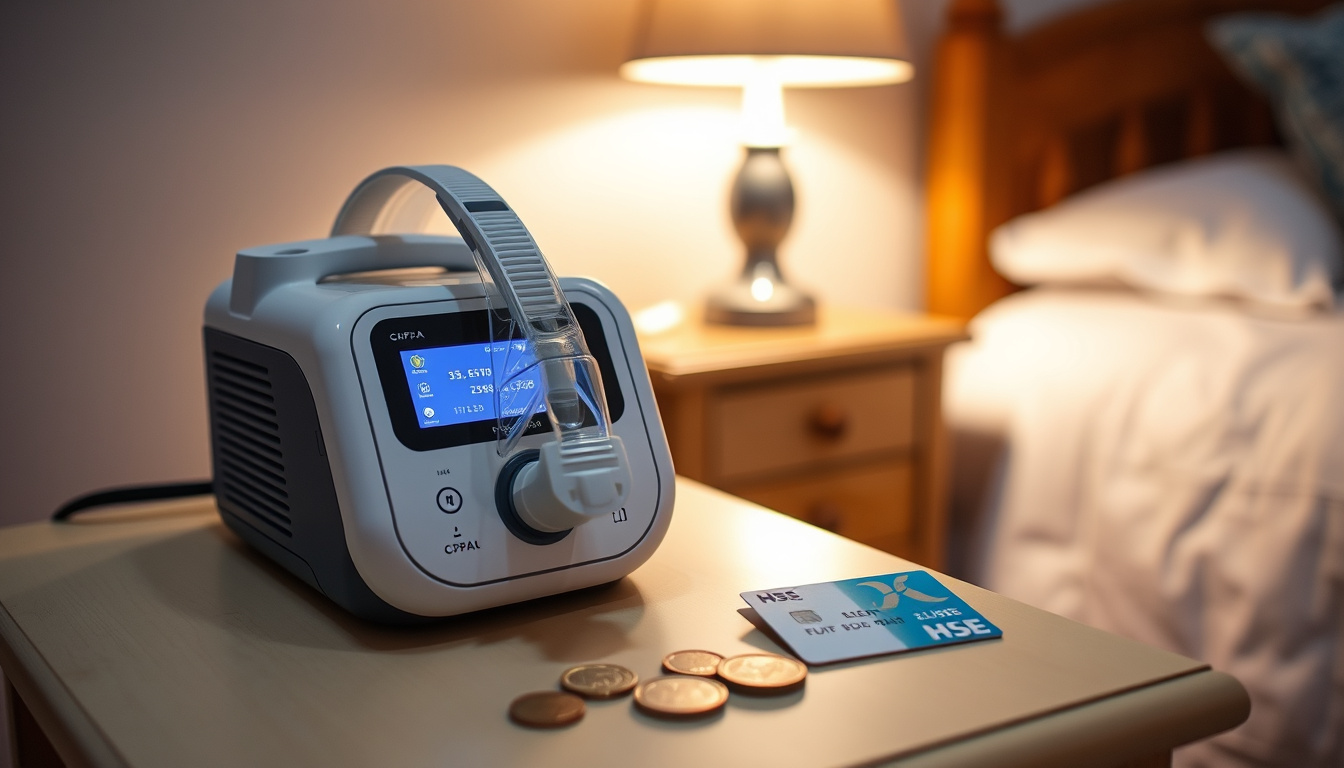

CPAP machines are the standard treatment for obstructive sleep apnoea, and in Ireland there are pathways to access them at low or no cost through the HSE. Research shows how they work, what they cost, and how to get one.
Rental cost in Ireland: €60 per month · HSE coverage: Provides CPAP treatment · Top provider: Air Liquide Healthcare Ireland (HSE-ranked Number One) · Risk reduced: High blood pressure
Quick snapshot
- CPAP eases snoring and tiredness (HSE.ie)
- Rental €60/month from providers (Beechfield Sleep)
- HSE reduces high blood pressure risk (HSE.ie)
- Exact medical card eligibility thresholds
- How the “4% rule” applies in practice
- Specific private insurer contribution amounts
- Diagnosis typically requires sleep study referral
- Discretionary cards issued for specific timeframes
- HSE supplies CPAP for diagnosed patients
- Medical Card covers all costs fully
- Drugs Payment Scheme caps at €80/month
| Label | Value |
|---|---|
| Primary treatment | CPAP machine |
| Irish rental price | €60/month incl. mask |
| Gov provider | HSE.ie |
| Top symptoms | Snoring, gasping, fatigue |
| Side effects noted | Mask discomfort |
| Drugs Payment Scheme cap | €80 per calendar month |
| Mask options | Nose or nose and mouth |
| Diagnosis method | Polysomnography (7 parameters) |
Does a sleep apnea machine actually work?
Yes — CPAP (Continuous Positive Airway Pressure) machines are the most widely recommended treatment for obstructive sleep apnoea. A CPAP machine is a small pump that delivers a continuous supply of compressed air through a mask worn over the nose or both nose and mouth, stopping the throat from closing during sleep.
The HSE’s treatment guidance (Ireland’s Health Service Executive) confirms that CPAP machines can ease symptoms such as snoring and tiredness. The compressed air acts as a pneumatic splint, holding the airway open throughout the night.
How CPAP delivers continuous air
The machine draws room air, pressurises it, and delivers it through tubing to a mask. Masks cover either the nose or both nose and mouth. Auto CPAP models adjust pressure automatically throughout the night based on breathing patterns.
Evidence from Mayo Clinic and HSE
CPAP therapy can reduce the risk of sleep apnoea complications including high blood pressure, according to HSE treatment information. Mayo Clinic’s sleep apnoea overview notes that untreated sleep apnoea increases cardiovascular risk. For moderate or severe sleep apnoea, doctors may recommend using a CPAP machine.
The implication: CPAP doesn’t cure sleep apnoea, but it effectively manages symptoms and reduces health risks — provided the patient uses it consistently.
“CPAP can ease symptoms such as snoring and tiredness.”
— HSE.ie — obstructive sleep apnoea treatment guidance
“A CPAP machine is a small pump that delivers a continuous supply of compressed air through a mask, stopping the throat from closing during sleep.”
— HSE.ie — sleep apnoea treatment options
“Untreated sleep apnea increases your risk of heart disease, heart failure, and stroke.”
What are 5 symptoms of sleep apnea?
Obstructive sleep apnoea occurs when breathing stops and starts during sleep due to throat walls relaxing and narrowing, according to HSE.ie (Ireland’s government health authority).
Common signs from Mayo Clinic
- Loud snoring — the most recognised symptom
- Gasping for air during sleep
- Daytime fatigue despite a full night’s rest
- Morning headaches
- Difficulty concentrating due to poor sleep quality
Diagnosis using wearable devices
Sleep specialists assess sleep apnoea using polysomnography which measures brain waves, muscle tone, blood oxygen levels, heart rate, airflow, breathing rate, and eye movement. Home sleep testing devices record oxygen levels, breathing movements, heart rate, and snoring. Sleep apnoea severity is based on AHI score which measures how often breathing stops during sleep.
Age-related diagnosis disparities exist — older adults may present with less obvious snoring but more pronounced daytime sleepiness, which can delay diagnosis.
How much does a CPAP machine cost in Ireland?
Rental and purchase options exist, with pathways that can bring costs to zero for eligible patients. Beechfield Sleep (specialist Irish sleep equipment provider) lists key pricing pathways.
Rental vs buy options
Rental typically costs €60 per month and often includes the mask. Buying a CPAP machine outright involves higher upfront costs but may work out cheaper over time depending on machine lifespan and mask replacement needs.
Medical card eligibility
Medical Card holders have all CPAP therapy costs covered by their medical card, according to Home Healthcare (approved HSE provider). Replacement mask payments for Medical Card holders are handled through HSE submission by healthcare providers. Medical Card holders receive annual CPAP machine checks and accessory replacement during those checks.
When comparing rental versus purchase, Irish residents should factor in that the Drugs Payment Scheme caps monthly spending at €80, making rental the more predictable option for those without Medical Cards.
For Medical Card holders, CPAP costs nothing beyond the standard card. Irish residents without a Medical Card can apply for the Drugs Payment Scheme, which caps monthly spending at €80.
Is a CPAP machine free in Ireland?
Not entirely free for everyone, but the HSE does supply CPAP machines for diagnosed patients, and several pathways can reduce or eliminate out-of-pocket costs.
HSE provision details
Air Liquide Healthcare Ireland is ranked as the Number One supplier for the HSE for CPAP services, according to Air Liquide Healthcare Ireland (HSE-approved medical equipment supplier). The HSE discretionary medical card page notes that CPAP machine rental and purchase costs can be included as medical expenses in applications.
Medical card and HSE coverage
Discretionary medical cards give the same services as means-tested medical cards. Applications should include evidence of medical expenses such as receipts for CPAP equipment, with medical reports from GPs or hospital consultants supporting the case.
What happens if sleep apnea goes untreated?
The health stakes are real. CPAP therapy can reduce the risk of sleep apnoea complications including high blood pressure. Without treatment, these risks increase over time.
Health risks
- Increased high blood pressure — the most documented cardiovascular risk
- Worsened tiredness and reduced daytime function
- Higher risk of heart disease and stroke
- Relationship strain from loud snoring
Best habits for management
Lifestyle changes can sometimes help treat mild obstructive sleep apnoea. Weight loss, avoiding alcohol before bed, and sleeping on your side can reduce symptom severity. For moderate or severe sleep apnoea, doctors may recommend using a CPAP machine.
| Specification | Detail |
|---|---|
| Machine type | Auto CPAP with humidifier |
| Pressure range | 4–20 cm H2O (typical) |
| Mask options | Nose pillow, nasal cradle, full-face |
| Ramp feature | Gradual pressure increase from low start |
| Humidification | Integrated heated humidifier standard |
| Noise level | Typically under 30 dB |
| Irish rental (€60/month) | Incl. mask, tubing, filters |
| Drugs Payment Scheme cap | €80 per calendar month |
| Mask coverage (CPAP) | Nose or nose and mouth |
| Diagnostic method | Polysomnography (7 parameters) |
| AHI measurement | Apnoea-Hypopnoea Index per hour |
| HSE-ranked top supplier | Air Liquide Healthcare Ireland |
Upsides
- Reduces snoring and daytime tiredness
- Lowers high blood pressure risk
- HSE and Medical Card cover available
- Drugs Payment Scheme caps cost at €80/month
- Improves sleep quality measurably
- Auto CPAP adjusts pressure automatically
Downsides
- Mask discomfort is common initially
- Nasal congestion and irritation reported
- Requires consistent nightly use
- Machine noise may disturb partners
- Ongoing mask and filter replacement costs
- Side effects include headaches and flatulence
How to get and maintain a sleep apnea machine
Five steps cover the typical pathway from suspicion to nightly treatment.
- Get assessed: Visit your GP if you recognise the symptoms — loud snoring, gasping, daytime fatigue. They’ll refer you for a sleep study.
- Complete a sleep study: Polysomnography measures 7 parameters or home testing records oxygen levels and breathing patterns. Severity is scored via AHI.
- Confirm diagnosis: If moderate or severe sleep apnoea is confirmed, CPAP is typically recommended. Your consultant will prescribe the machine and settings.
- Arrange funding: Medical Card holders contact HSE-approved providers directly. Others apply for the Drugs Payment Scheme (€80 cap) or check private insurance contributions.
- Maintain regularly: Clean tubing and mask daily, replace filters monthly, and schedule annual check-ups. Medical Card holders receive annual CPAP machine checks and accessory replacement during those checks.
Private insurance CPAP payments are subject to confirmation from a Medical Consultant and are typically found under medical devices or approved medical devices sections — check your policy carefully.
For Irish residents wondering whether to act on their symptoms, the path forward is straightforward: see a GP, get assessed, and explore funding. Medical Card holders face no out-of-pocket costs for CPAP treatment. Everyone else can cap spending at €80 per month through the Drugs Payment Scheme — or potentially nothing through discretionary card applications with documented medical expenses.
Related reading: ADHD in Adults: Symptoms, Signs, Diagnosis & Treatment · High Functioning Autism – Symptoms, Diagnosis, Living Well
Many sleep apnea patients first tackle snoring—a hallmark symptom—through HSE snoring relief tips that complement CPAP machine use effectively.
Frequently asked questions
What is the 4% rule for sleep apnea?
The “4% rule” typically refers to the AHI (Apnoea-Hypopnoea Index) threshold used to classify mild sleep apnoea — generally, mild sleep apnoea is diagnosed when breathing stops or slows for at least 4% of total sleep time. The HSE uses AHI scores to determine severity and appropriate treatment pathways.
What is the pillow trick against sleep apnea?
The pillow trick involves positioning pillows to keep the head and neck aligned and slightly elevated, which can reduce airway obstruction for some mild cases. It works best alongside other lifestyle changes like weight management and avoiding alcohol before bed.
How to maintain a CPAP machine and mask?
Clean the mask and tubing daily with warm water and mild soap. Replace filters monthly or as recommended. Annual professional servicing is included for Medical Card holders. Regular maintenance extends machine life and ensures consistent therapy pressure.
Where can I buy a sleep apnea machine in Ireland?
HSE-approved suppliers include Air Liquide Healthcare Ireland (Number One ranked for HSE) and Beechfield Sleep. Both offer rental and purchase options. Your consultant will usually provide a prescription specifying the appropriate machine type and pressure settings.
What are sleep apnea machine side effects?
Common CPAP problems include uncomfortable masks, nasal congestion, runny nose, nasal irritation, difficulty breathing through the nose, headaches, ear pain, stomach pain, and flatulence. Most side effects can be managed by adjusting mask fit, humidity settings, or pressure levels in consultation with your equipment provider.
Can sleep apnea be diagnosed with a wearable device?
Yes. Home sleep testing devices record oxygen levels, breathing movements, heart rate, and snoring. Irish Life Health offers a Sleep Apnoea Screening Programme managed by Care-Connect — participants receive a small monitoring device sent to their home for one-night testing.
What habits help manage sleep apnea?
Lifestyle changes can sometimes help treat mild obstructive sleep apnoea: losing weight, avoiding alcohol before bed, sleeping on your side, and maintaining regular sleep schedules all contribute. For moderate or severe cases, CPAP remains the most effective treatment despite these supportive measures.

Andrew Ellis leads fact-checking, source verification and corrections at Oz Reviewly.