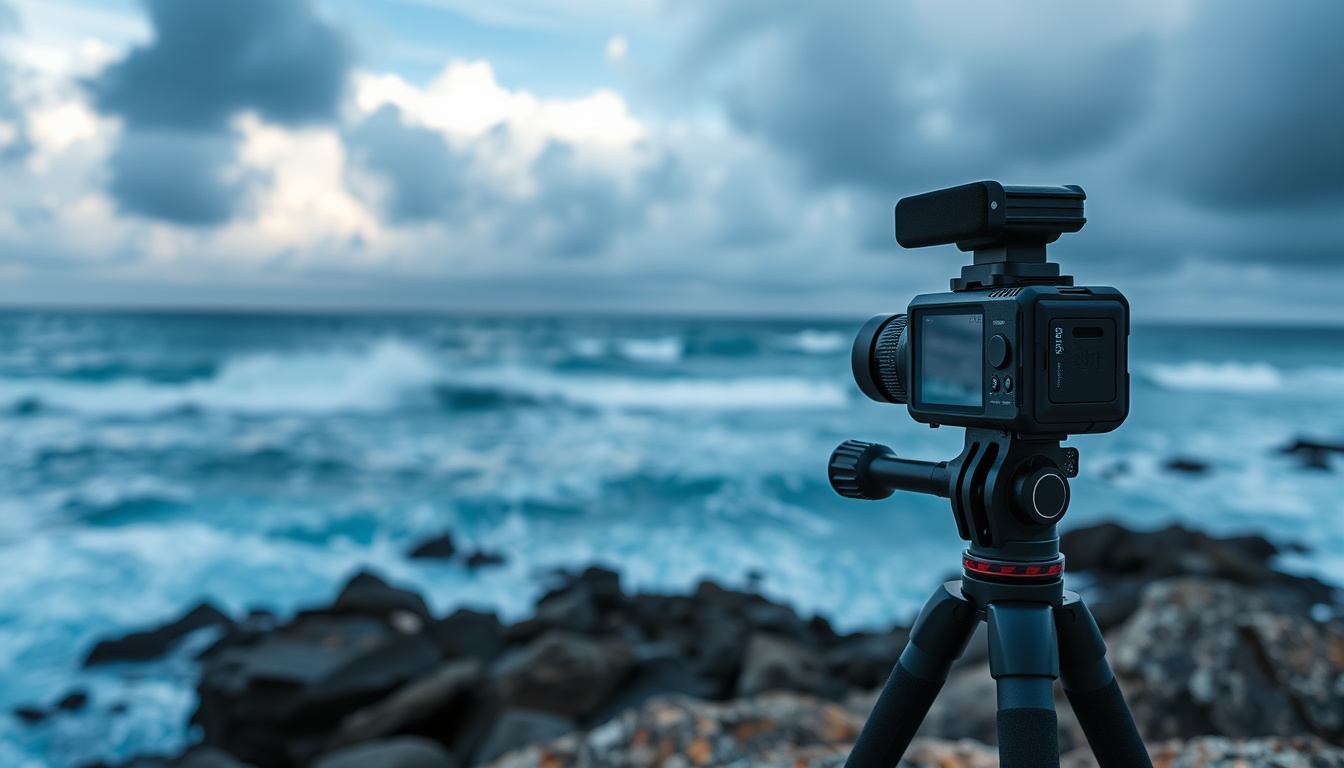
Few things frustrate an action camera owner more than pulling up underwater footage that’s too dark to use. That’s where DJI’s latest contender, the Osmo Action 5 Pro, aims to change the game for divers and adventurers alike. With a larger sensor and a dedicated depth gauge, this compact camera promises professional-grade image quality where it matters most—below the surface. This review breaks down how it stacks up against the competition and whether it’s the right upgrade for you.
Sensor: 1/1.3-inch CMOS ·
Chip: 4nm processor ·
Slow Motion: Up to 32x with frame interpolation ·
Screens: Dual OLED high-brightness touchscreens ·
Connectivity: Wi-Fi 6.0
Quick snapshot
- 1/1.3-inch sensor improves low-light capture (TechRadar)
- Waterproof to 20m without housing (Maison Du Drone)
- 47GB built-in storage (TechRadar)
- Whether Action 5 Pro beats GoPro 13 in every underwater condition — limited independent dive tests
- Exact release timeline for DJI Osmo Action 6
- Action 5 Pro launched September 2024, replacing Action 4 (August 2023) (Diver review)
- Possible Action 6 announcement in 2026 — but unconfirmed
Here’s a quick look at the key specifications of the DJI Osmo Action 5 Pro:
| Specification | DJI Osmo Action 5 Pro |
|---|---|
| Sensor size | 1/1.3-inch |
| Processor | 4nm |
| Max slow-motion | 32x (frame interpolation) |
| Front screen | OLED touchscreen |
| Waterproof depth | 20m without housing |
| Built-in storage | 47GB |
| Connectivity | Wi-Fi 6.0 |
| Depth gauge | Yes (EN13319 compliant) |
| Weight | 145g |
| Operating temperature | -20°C to 45°C |
Is the DJI Action 5 Pro worth it?
Overall value proposition
The DJI Osmo Action 5 Pro carries a price that sits in the premium tier of action cameras, but the hardware justifies the cost for anyone who regularly shoots in challenging environments. The 1/1.3-inch sensor, which TechRadar notes delivers 13.5 stops of dynamic range, captures significantly more light than previous-generation sensors. That translates to usable footage in dim underwater scenes where older cameras produce muddy, noisy video.
The 4nm processor enables frame-by-frame analysis and 4x frame interpolation, achieving up to 32x slow-motion, as Maison Du Drone describes it. For a diver capturing a fast-moving reef shark or a mountain biker hitting a jump, that kind of slo-mo headroom is a creative tool, not a gimmick.
Price vs performance
Five specs, one pattern: DJI concentrated its biggest upgrades around image quality and usability in extreme conditions rather than adding gimmicks. The dual OLED touchscreens (TechRadar) are brighter than the LCD panels on the Action 4, making them readable in direct sunlight. Wi-Fi 6.0 means 4K files transfer to a phone or laptop in seconds rather than minutes. The built-in barometer, compliant with the EN13319 diving standard (TechRadar), displays real-time depth on the screen underwater — a first for consumer action cameras.
The implication: DJI didn’t just bump numbers; it redesigned the user workflow for the people who actually take these cameras into the water. For a diver who previously needed a separate depth gauge or housing, that integration alone is worth the upgrade.
Is the Action 5 Pro better than the GoPro?
Image quality and sensor comparison
The sensor battle is the headline. DJI uses a 40MP 1/1.3-inch sensor; GoPro uses a 27MP 1/1.9-inch sensor. That’s a significant size advantage — roughly 50% more surface area — and YouTube comparisons show the DJI pulling ahead in underwater low-light video. The larger sensor captures more photons, meaning less noise and better color retention at depth where red light gets absorbed first.
Four differences, one pattern: DJI’s sensor and chip combination directly addresses the two biggest pain points for action camera buyers — low-light performance and slow-motion quality. GoPro’s 1/1.9-inch sensor and GP2 processor still produce excellent footage in good light but can’t match the Action 5 Pro’s low-light headroom.
The implication: DJI didn’t just bump numbers; it redesigned the user workflow for the people who actually take these cameras into the water. For a diver who previously needed a separate depth gauge or housing, that integration alone is worth the upgrade.
Water resistance and durability
This is where DJI separates from GoPro most clearly. The Action 5 Pro is waterproof to 20 meters without a housing, double the GoPro Hero 13 Black’s 10-meter rating (Maison Du Drone). DJI also claims operation from -20°C to 45°C, compared to GoPro’s -10°C to 35°C (Maison Du Drone).
The catch: GoPro’s ecosystem is larger, with more third-party mounts and accessories available worldwide. If you’ve already invested in GoPro mounts, switching costs are real.
Divers face a concrete choice: Action 5 Pro’s 20m depth rating and auto-record at 1m depth are significant advantages. But GoPro retains an edge in accessory availability and established brand trust among casual users.
The pattern: DJI leads in underwater capability, GoPro leads in ecosystem.
What’s the difference between DJI Osmo Action 5 and 6?
Known spec differences (Action 5 Pro vs rumored Action 6)
The DJI Osmo Action 6 has not been announced. Rumors point to a possible 2026 release, but nothing is confirmed. Based on the leap from Action 4 to Action 5 Pro — which introduced the 4nm chip, larger sensor, and dual OLED screens — the Action 6 would likely be an incremental update rather than a generational overhaul.
Current owners of the Action 5 Pro: upgrading to an eventual Action 6 probably won’t make sense unless you absolutely need a specific new feature like 8K recording or a built-in ND filter. The Action 5 Pro’s 32x slow-motion and 20m waterproofing already cover what most users need through 2026.
What is the difference between DJI Action 5 and 4?
Sensor and chip improvements
The Action 4 used a 1/1.7-inch sensor and an older chip. The Action 5 Pro jumps to a 1/1.3-inch sensor — 15% larger — paired with a 4nm processor. That chip, as Maison Du Drone explains, enables frame-by-frame analysis achieving up to 32x slow-motion via 4x frame interpolation. The Action 4 topped out at around 8x slow-motion.
Screen technology upgrade
The Action 5 Pro replaces the standard LCD panels of the Action 4 with dual OLED touchscreens. OLED offers truer blacks, higher contrast, and better sunlight readability. For framing shots in bright outdoor conditions, this is a tangible difference.
An Action 4 owner who shoots mostly snorkeling or mountain biking will see meaningful improvements in low-light footage and screen usability. The upgrade isn’t mandatory — Action 4 footage is still good — but the 15% larger sensor and 32x slow-motion are real steps forward.
The implication: Action 4 owners who prioritize low-light and screen usability have a clear upgrade path.
Does the DJI Action 5 take good photos?
Photo resolution and clarity
The Action 5 Pro captures 12-megapixel stills from its 1/1.3-inch sensor. That’s not a high number by modern smartphone standards, but it’s plenty for social media, web use, and small prints. The 13.5 stops of dynamic range (TechRadar) mean better highlight and shadow retention than typical action cameras.
Low light photo performance
The larger sensor’s main benefit for stills is low-light performance. In dusk scenes or deep water where sunlight fades, the Action 5 Pro retains more detail than the GoPro 13 or Action 4. Burst mode and interval shooting work reliably for time-lapses of sunsets or construction projects.
The implication: if you primarily use an action camera for video but occasionally grab a still, the Action 5 Pro’s photo quality is a bonus, not the main event. For dedicated photography, a proper mirrorless camera still wins.
The following comparison table highlights the differences between the three action cameras:
| Feature | DJI Action 5 Pro | GoPro Hero 13 Black | DJI Action 4 |
|---|---|---|---|
| Sensor | 1/1.3-inch 40MP | 1/1.9-inch 27MP | 1/1.7-inch |
| Waterproof (no housing) | 20m | 10m | 18m |
| Front screen | OLED touchscreen | Color screen | LCD |
| Max slow-motion | 32x (frame interpolation) | 8x | 8x |
| Built-in storage | 47GB | None | None |
| Barometer/depth gauge | Yes (EN13319) | No | No |
Three action cameras, one pattern: DJI’s Action 5 Pro essentially leapfrogs both its predecessor and the current GoPro by targeting the specific pain points of divers and low-light shooters. Larger sensor, deeper waterproofing, and a depth gauge together create a package that genuinely changes underwater workflow.
Upsides
- Larger 1/1.3-inch sensor beats GoPro and Action 4 in low light
- 20m waterproof depth — twice GoPro’s rating
- Built-in depth gauge with real-time display
- 32x slow-motion with frame interpolation
- 47GB internal storage saves buying a microSD card immediately
- Dual OLED screens readable in sunlight
Downsides
- Higher price than GoPro Hero 13 Black
- Smaller accessory ecosystem than GoPro
- 12MP stills — adequate but not class-leading
- Action 6 unknown — potential future buyers may wait
- Only one generation of slow-motion improvement validated in third-party reviews
User experiences and real-world footage
“I am very very happy with it. It produces good quality content.”
Reddit user (1-week ownership)
“Next-gen 1/1.3-inch sensor sets a new standard for action camera image quality.”
DJI official product page
The Reddit sentiment echoes a broader pattern in early user reports: satisfaction centers on the low-light and underwater results, where prior cameras struggled. DJI’s own marketing emphasizes the sensor as the differentiator, and the combination of hardware specs and user feedback supports that claim.
The trade-off: GoPro’s larger community means more troubleshooting guides, mounts, and firmware modding resources. DJI’s ecosystem is smaller but growing, and the company’s track record with gimbals and drones lends credibility to its camera engineering.
Related reading: DJI Osmo Action 5 Pro vs GoPro Hero 13 Black specs comparison · GoPro Hero 13 Black vs DJI Osmo Action 5 Pro: has DJI dethroned GoPro?
For a deeper look at its underwater performance and battery life, check out our full DJI Osmo Action 5 Pro review for detailed specs and a GoPro comparison.
Frequently asked questions
What is the battery life of the DJI Osmo Action 5 Pro?
Battery life varies by usage, but DJI rates it at approximately 80 minutes of 4K recording at 30fps. Underwater filming with the screen active will reduce endurance. The camera supports USB-C fast charging.
Does the DJI Action 5 Pro have a live streaming feature?
Yes, the Action 5 Pro supports live streaming via the DJI Mimo app over Wi-Fi 6.0, enabling 1080p streams to platforms like YouTube and Facebook.
Is the DJI Osmo Action 5 Pro compatible with DJI Mic?
Yes, the Action 5 Pro connects wirelessly to the DJI Mic 2 via Bluetooth, allowing high-quality external audio capture without a cable.
Can the DJI Action 5 Pro shoot in 4K 120fps?
Yes, it supports 4K at up to 120fps, enabling smooth slow-motion playback without frame interpolation.
Is the DJI Osmo Action 5 Pro waterproof without a housing?
Yes, it is waterproof to 20 meters (66 feet) without any housing, as confirmed by Maison Du Drone.
Does the DJI Action 5 Pro support external microphones?
It supports the DJI Mic 2 wirelessly and accepts external USB-C microphones with an adapter. There is no standard 3.5mm jack.
What is the weight of the DJI Osmo Action 5 Pro?
The camera weighs approximately 145 grams (5.1 ounces) including battery, making it slightly lighter than the GoPro Hero 13 Black.

Catherine Roy is Editor-in-Chief at Oz Reviewly, overseeing editorial standards, publication decisions and corrections.