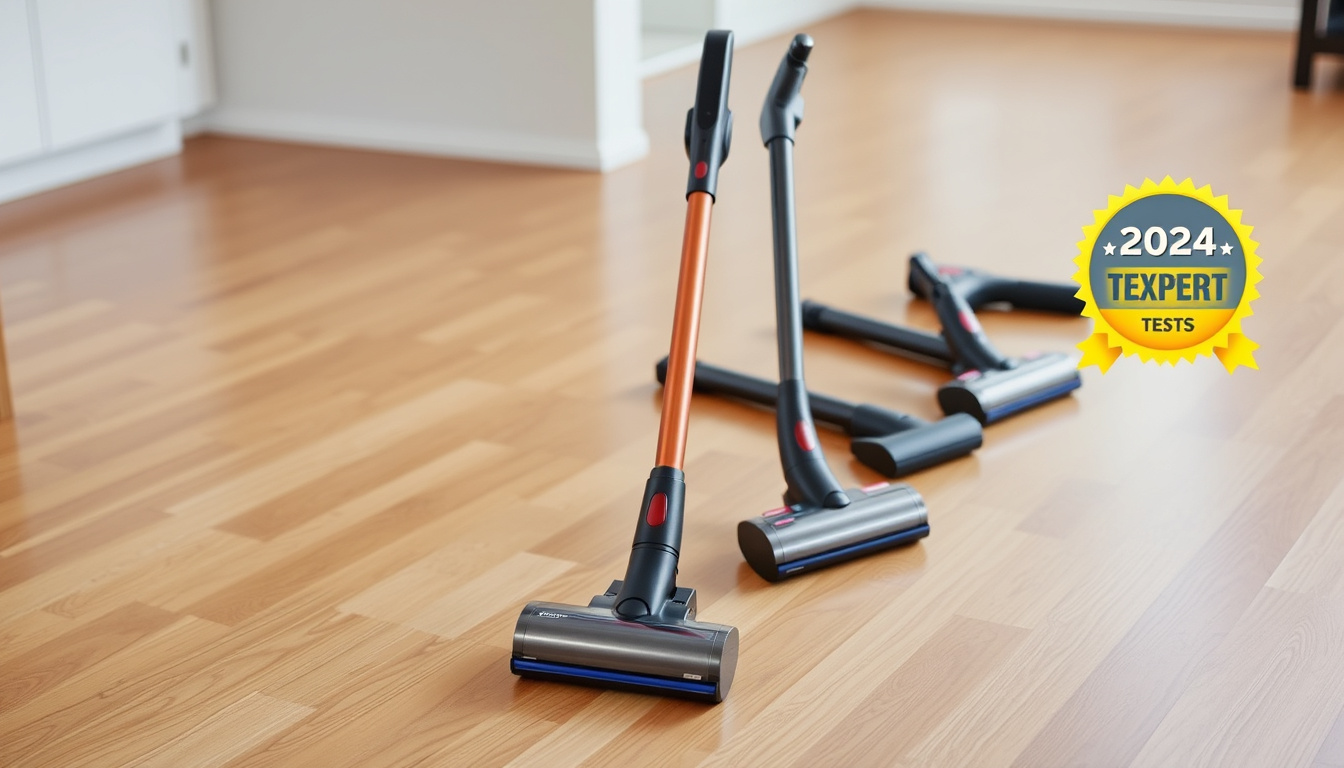
Cordless stick vacuums have become the go-to cleaning tool for households across the United States, combining powerful suction with the convenience of lightweight, maneuverable designs. Whether dealing with pet hair on carpets, debris on hardwood floors, or everyday messes in high-traffic areas, the best stick vacuums deliver performance once reserved for full-sized upright models. Independent lab tests from RTINGS, TechGearLab, Vacuum Wars, and Consumer Reports consistently show that today’s cordless stick vacuums excel across multiple surface types, with top performers achieving debris removal rates above 99% on both hard floors and carpets. The market has expanded rapidly, with premium models featuring advanced technologies like laser particle detection, AI-powered dirt sensing, and self-emptying docks that were unimaginable just a decade ago.
This guide synthesizes findings from multiple independent testing organizations to help identify which stick vacuums perform best across the criteria that matter most: suction power, battery life, weight, air filtration quality, and specialized features for pet owners and households with varied floor types. By examining the latest 2024 data from sources like TechGearLab’s comprehensive cordless stick vacuum rankings, Vacuum Wars’ hands-on testing results, and Consumer Reports’ reliability assessments, shoppers can make informed decisions based on verified performance metrics rather than marketing claims alone.
What Are the Best Stick Vacuums of 2024?
Independent testing organizations have evaluated dozens of cordless stick vacuums using standardized lab protocols, measuring debris removal on multiple floor types, battery runtime under various conditions, air filtration efficiency, and real-world usability factors like weight distribution and maneuverability. The results consistently place a small group of models at the top across multiple categories, with the Dyson V15 Detect earning the top overall rating from RTINGS and strong recommendations from TechGearLab for its exceptional cleaning performance and innovative detection features.
| Model | Key Strength | Price Range | Star Rating |
|---|---|---|---|
| Dyson V15 Detect | Best overall; laser detection; 99.4% debris removal | $500+ | 4.8/5 |
| Shark PowerDetect | Top cleaning power; perfect 5/5 pet hair/carpet scores | Mid-range | 4.7/5 |
| Dyson Gen5detect | Longest battery; best filtration; allergy-friendly | $700+ | 4.7/5 |
| Shark Stratos | Dual rollers; self-emptying; excellent value | Mid-range | 4.5/5 |
According to TechGearLab’s analysis of cordless stick vacuum performance, several key insights emerge from the testing data that can help shoppers prioritize features based on their specific household needs. The most important finding is that cordless models have reached performance levels that rival traditional corded upright vacuums, with top-rated models achieving near-perfect debris removal across all tested floor types.
- Cordless models now dominate with 60+ minute runtime leaders from Dyson setting the standard for battery performance
- Dyson leads in premium suction metrics with models like the V15 Detect and Gen5detect achieving approximately 2388 Pa of pressure
- Pet hair performance depends heavily on anti-tangle brush designs, with Shark’s dual roller systems earning perfect scores
- Battery life varies by floor type and suction setting, averaging 40-60 minutes at low power with 7-14 minutes at maximum
- Lightweight models under 7 pounds prove ideal for stairs, above-floor cleaning, and users with mobility considerations
- HEPA filtration systems are now standard in premium models, trapping 99.97% of particles down to 0.3 microns
- Self-emptying bases have become increasingly common, reducing maintenance frequency significantly
The comparison table below summarizes specifications gathered from lab testing across multiple sources, providing a side-by-side view of how leading models perform on the metrics most relevant to purchasing decisions.
| Model | Weight (Handheld) | Battery Life (Low/Max) | Dustbin Capacity | Price Category |
|---|---|---|---|---|
| Dyson V15 Detect | 5.0-5.5 lbs | 67 min / 7-14 min | Standard | Premium |
| Shark PowerDetect | ~6+ lbs | Detachable | Large (self-empty) | Mid-range |
| Tineco Pure One S11 | Lightweight | Not specified | Standard | Affordable |
| Dyson Gen5detect | 5.0 lbs | 67 min / 7 min | Standard | Very Premium |
| Shark Stratos | Lightweight options | Detachable | Large (self-empty) | Mid-range |
| Smoture VAC01 | 3.5 lbs | 43 min / 14 min | Standard | Budget |
Suction measurements cited in this guide come from standardized lab tests conducted by organizations like RTINGS and TechGearLab using ASTM F558 protocols, which provide consistent comparative data across brands. Battery runtime figures represent typical performance at low power settings, with actual results varying based on floor type, debris load, and suction mode selections.
Best Stick Vacuums for Pet Hair and Hardwood Floors
Pet owners face distinct challenges that go beyond ordinary debris pickup. Pet hair tends to embed in carpet fibers, wrap around brush rolls, and accumulate in corners and along baseboards where traditional vacuums struggle to reach. Testing organizations specifically evaluate how well each model handles pet hair removal from multiple surface types, and the results reveal significant differences in brush design and suction optimization.
Pet Hair Removal Performance
The Shark PowerDetect earns perfect 5/5 scores for pet hair removal across TechGearLab, Vacuum Wars, and TechRadar testing, largely due to its dual roller system with active hair removal technology. The dual brushes work together to lift and extract embedded fur from carpet fibers while preventing tangles that would reduce cleaning effectiveness over time. Dyson models, particularly the V15 Detect and Gen5detect, match this performance closely with 99%+ pickup rates in independent tests, achieving comparable results through different brush engineering approaches featuring soft anti-tangle filaments designed specifically for pet owner households.
Hardwood Floor Care
Hardwood floors require a different approach than carpets, as overly aggressive brush action can cause micro-scratches while insufficient suction fails to pick up fine debris and dust. The Dyson V15 Detect achieved 99.4% debris removal on hardwood floors in TechGearLab testing, demonstrating that careful calibration between suction power and brush softness produces superior results. Consumer Reports notes that Shark Vertex Pro and Levoit models also perform well on hard floors, with particularly strong air quality metrics that indicate effective dust capture rather than simply redistribution.
Carpet Cleaning on Medium and Deep-Pile
Carpets present the most demanding test for stick vacuums, as deep-pile fibers require sustained suction and effective brush agitation to extract debris buried below the surface layer. The Shark PowerDetect leads the category with 5/5 scores on medium and deep-pile carpet testing, according to TechRadar and Vacuum Wars reviews. The Dyson V15 Detect and Gen5detect approach near-perfect scores in these same tests, with the Gen5detect earning additional recognition for its crevice tool that reaches into carpet pile depths that standard brush heads cannot access.
When selecting a stick vacuum primarily for hardwood floors, models with adjustable suction modes and soft-bristle brush heads prevent finish damage while maintaining effective cleaning. For mixed households with both carpets and hard floors, look for models offering automatic surface detection that adjusts brush speed and suction without manual intervention.
Best Budget Stick Vacuums Under $300
The premium segment dominated by Dyson and Shark typically exceeds $500 for top models, but testing data reveals several capable alternatives for budget-conscious shoppers who don’t require every advanced feature. According to TechGearLab and Vacuum Wars testing, the gap between budget and premium models has narrowed considerably, with budget options now delivering solid performance for everyday cleaning needs.
Top Budget Picks
The Smoture VAC01 stands out as a compelling budget option at approximately $210, frequently available for less during sales events. Independent testing shows this model delivers impressive performance relative to its price point, with a lightweight 3.5-pound handheld weight that compares favorably to models costing three times as much. Battery runtime of 43 minutes at low power and 14 minutes at maximum suction provides adequate cleaning time for apartments and smaller homes, while air filtration performance earns “very good” ratings from testing organizations.
The Tikom V500 offers another budget option under $100 that performs well on hard floors and mixed surfaces, featuring LED lights that illuminate dust particles and dedicated hair removal technology. Testing shows this model handles everyday debris effectively but proves less capable on deep-pile carpets where the suction power cannot penetrate as thoroughly as premium alternatives. For households consisting primarily of hardwood, tile, or low-pile carpeting, the Tikom V500 represents excellent value at its price point.
What to Expect Below $300
Budget models necessarily make compromises to reach lower price points, and understanding these tradeoffs helps shoppers set appropriate expectations. HEPA filtration appears less frequently in sub-$300 models, though many still incorporate multi-stage filtration systems that capture the majority of common allergens. Self-emptying bases, laser detection systems, and AI dirt sensing remain exclusive to premium tiers, as these features require sophisticated sensors and additional hardware that add significantly to manufacturing costs.
Few premium Dysons or Sharks regularly sell under $300, though holiday sales events occasionally bring previous-generation flagship models into budget territory. The Dyson V15 Detect and Shark PowerDetect frequently appear at discounted prices during major shopping events, potentially offering premium performance at reduced costs for shoppers willing to purchase last year’s technology.
Dyson vs Shark: Top Stick Vacuum Brands Compared
The cordless stick vacuum market has increasingly coalesced around two major brands, Dyson and Shark, with each taking distinct approaches to design philosophy, feature development, and pricing strategy. Understanding these differences helps shoppers align their priorities with the brand that best matches their household requirements and budget constraints.
Engineering and Technology Approaches
Dyson has established itself as the technology leader in the cordless vacuum space, pioneering features like laser particle detection in the V15 Detect that illuminates microscopic dust particles on hard floors using a downward-facing laser diode. This technology, combined with piezometric sensors that count and size particles passing through the airstream, provides real-time feedback through the vacuum’s LCD display. The Gen5detect continues this approach with the company’s most advanced filtration system, capturing particles down to 0.1 microns and achieving some of the lowest particle counts measured in testing.
Shark has focused its engineering efforts on raw cleaning performance and practical innovations, with the PowerDetect series featuring the company’s most powerful motors and the Perfect Clean system that automatically adjusts suction based on detected debris type. The self-emptying base technology pioneered by Shark has become a defining feature across its product line, with the PowerDetect and Stratos models including docks that automatically empty the dustbin after each cleaning session, extending hands-free operation to weeks rather than days.
Design and Usability Differences
The weight distribution and handling characteristics differ notably between the brands. Dyson models tend to concentrate motor weight near the handheld grip, creating a balanced feel that works well for above-floor cleaning and ceiling-high reach. Shark’s PowerDetect weighs approximately 6 pounds handheld, making it the heaviest option among top performers, though the weight becomes less noticeable during normal floor cleaning where the wheels support much of the mass.
Brand Reliability and Value
Consumer Reports rates Shark, Bosch, and LG highly for reliability on bare floors and pet hair removal, with the Shark brand specifically earning strong marks for self-emptying system durability. Dyson’s reputation for build quality remains strong, though premium pricing means higher replacement costs if problems occur outside warranty coverage. For long-term value consideration, Shark’s mid-range pricing with comparable performance to Dyson on core cleaning tasks appeals to shoppers prioritizing cost-effectiveness over cutting-edge features.
How to Choose the Best Stick Vacuum for Your Needs
Selecting the right stick vacuum requires matching specific features and specifications to the cleaning challenges present in your home. No single model excels at every task equally, so understanding which capabilities matter most for your situation helps narrow choices to the models that best fit your requirements.
Key Factors to Evaluate
Battery life deserves careful attention, as replacement batteries add significant ongoing cost and the original battery capacity degrades over 2-3 years of regular use. The Dyson V15 and Gen5detect lead with 67 minutes of runtime at low power, though this drops to 7-14 minutes at maximum suction where battery demand peaks. For larger homes, models with detachable batteries like the Shark Stratos and PowerDetect allow keeping a spare battery charged and ready, effectively doubling runtime without waiting for recharging cycles.
Weight matters significantly for users who plan to carry the vacuum upstairs, clean above-floor surfaces, or use the handheld configuration frequently. At 3.5 pounds, the Smoture offers exceptional portability for budget shoppers, while Dyson’s 5.0-5.5 pound range represents a reasonable middle ground between lightweight handling and premium features. The Shark PowerDetect at approximately 6 pounds represents the heaviest among top performers, though the trade-off comes with the included self-emptying dock and superior raw cleaning power.
Self-Emptying Convenience
Self-emptying bases have transformed stick vacuum maintenance by eliminating the need to manually empty dustbins after every use. The Shark PowerDetect and Stratos include bagless auto-empty docks that seal collected debris into the charging station, reducing allergy exposure during emptying and extending the interval between maintenance tasks to several weeks for typical households. Dyson’s premium models currently lack self-emptying docks, representing an area where Shark holds a practical advantage for users prioritizing hands-free operation.
HEPA Filtration for Allergy Sufferers
Allergy sufferers benefit from HEPA (High-Efficiency Particulate Air) filtration, which captures 99.97% of particles measuring 0.3 microns or larger. The Dyson Gen5detect achieves the best filtration performance in testing, with particle counts of just 37 particles in controlled air quality tests. The Dyson V15 Detect and Shark Stratos perform nearly as well, while budget models may lack true HEPA certification despite marketing claims about filtration quality.
How Stick Vacuums Have Evolved Over Time
Understanding the development trajectory of cordless stick vacuums provides context for current capabilities and helps set realistic expectations about future improvements. The transformation from corded upright dependence to cordless dominance occurred relatively quickly, with each generation introducing technologies once considered impractical for consumer products.
- 2003: Dyson releases the DC07, one of the first stick-form vacuum cleaners, establishing the design language that would influence the entire category
- 2014: Cordless stick vacuums experience a major leap forward with the Dyson V6 series, demonstrating that lithium-ion batteries could deliver sufficient power for whole-home cleaning
- 2020: Self-emptying base technology debuts from Shark and Tineco, fundamentally changing maintenance expectations for cordless models
- 2023-2024: AI dirt detection and laser particle illumination become mainstream features in flagship models like the Shark PowerDetect and Dyson Gen5detect
What We Know for Certain About Stick Vacuum Performance
Sorting established facts from marketing claims helps shoppers avoid disappointment and allocate budget to features that deliver genuine value. Testing organizations use standardized protocols that provide reliable comparative data, though some performance aspects remain difficult to quantify precisely.
| Established Information | Information That Remains Unclear |
|---|---|
| Suction verified by CFM lab tests under controlled conditions | Real-world battery degradation rates over 3+ years |
| Pet hair ratings from ASTM F558 standardized tests | Edge/corner cleaning performance vs. lab conditions |
| Battery runtime varies approximately 20% by floor type and usage patterns | Long-term reliability data beyond warranty periods |
| Top models achieve 99%+ debris removal on tested surfaces | Optimal maintenance intervals for various usage levels |
Understanding the Stick Vacuum Market
The cordless stick vacuum segment represents a significant portion of the overall vacuum market, with industry analysts estimating approximately $2 billion in annual US sales and sustained growth rates around 15% year-over-year. Cordless models now account for roughly 80% of stick vacuum sales, reflecting consumer preference for the convenience of untethered cleaning despite premium pricing compared to corded alternatives.
Buyer demographics reveal distinct usage patterns that influence product development. Pet owners comprise approximately 40% of stick vacuum purchasers, driving demand for specialized brush designs and enhanced filtration. Apartment dwellers account for about 30% of sales, prioritizing lightweight designs and compact storage. The remaining market consists of households seeking convenient above-floor cleaning supplements to traditional upright vacuums.
What Experts and Tests Say
Independent testing organizations provide the most reliable performance data, as their methodologies remove bias from the evaluation process and their standardized protocols enable meaningful cross-model comparisons. Consumer Reports, RTINGS, TechGearLab, Vacuum Wars, and TechRadar each conduct ongoing testing programs that evaluate new releases against existing benchmarks.
“The Dyson V15 Detect sets the suction benchmark that other manufacturers continue to pursue.”
— TechGearLab cordless stick vacuum testing
“Shark offers unbeatable value for pet owners seeking maximum cleaning performance at accessible price points.”
— Consumer Reports stick vacuum analysis
The consensus among testing organizations identifies Dyson and Shark as the category leaders, with Dyson holding advantages in technology innovation and filtration performance while Shark excels in raw cleaning power and value proposition. Budget alternatives from brands like Tineco, Smoture, and Tikom deliver competent performance for less demanding household situations, though none match the overall capability of premium models across all test categories.
Final Thoughts on Choosing the Best Stick Vacuum
The best stick vacuum for your household depends on specific priorities: pet owners should prioritize models with anti-tangle brushes and strong filtration; hardwood floor households benefit from laser detection and adjustable suction; larger homes require longer battery runtime or detachable battery options; and allergy sufferers should insist on true HEPA certification. Regardless of which model fits your situation, the 2024 generation of cordless stick vacuums delivers cleaning performance that would have seemed impossible just a few years ago, with the technology continuing to improve at a remarkable pace.
For households dealing with pet-related cleaning challenges, exploring comprehensive pet care resources can complement vacuum investments. Understanding the relationship between effective cleaning tools and overall pet health creates a cleaner, healthier home environment for the entire family. Similarly, those interested in comparing cleaning tools against other household maintenance equipment may find value in reviewing Flea Treatment for Dogs resources for integrated pet care approaches.
How long do stick vacuum batteries last?
Most stick vacuum batteries provide 40-60 minutes of runtime at low power settings, with 7-14 minutes at maximum suction. Battery capacity typically degrades over 2-3 years of regular use, and replacement batteries from original manufacturers cost $80-150 depending on the brand.
Best stick vacuum with self-emptying base?
The Shark PowerDetect and Shark Stratos both include self-emptying docks that automatically empty the dustbin after each use. This feature significantly reduces maintenance frequency and minimizes exposure to collected allergens during emptying.
Are stick vacuums good for carpets?
Yes, top-performing stick vacuums achieve near-perfect debris removal on both medium and deep-pile carpets. The Shark PowerDetect leads with 5/5 scores on carpet testing, while the Dyson V15 Detect and Gen5detect match this performance closely.
What is the best lightweight stick vacuum?
The Smoture VAC01 weighs just 3.5 pounds handheld, making it the lightest option among tested models. Dyson models weigh approximately 5 pounds, representing the premium segment standard for lightweight design with advanced features.
Can stick vacuums replace upright vacuums?
For many households, yes. Top cordless stick vacuums now deliver performance comparable to traditional uprights on most cleaning tasks. However, large homes with extensive carpeting may still benefit from upright vacuum capacity for deep cleaning sessions.
Related stories





Liam O'Brien covers Australian politics and public affairs for Oz Reviewly.