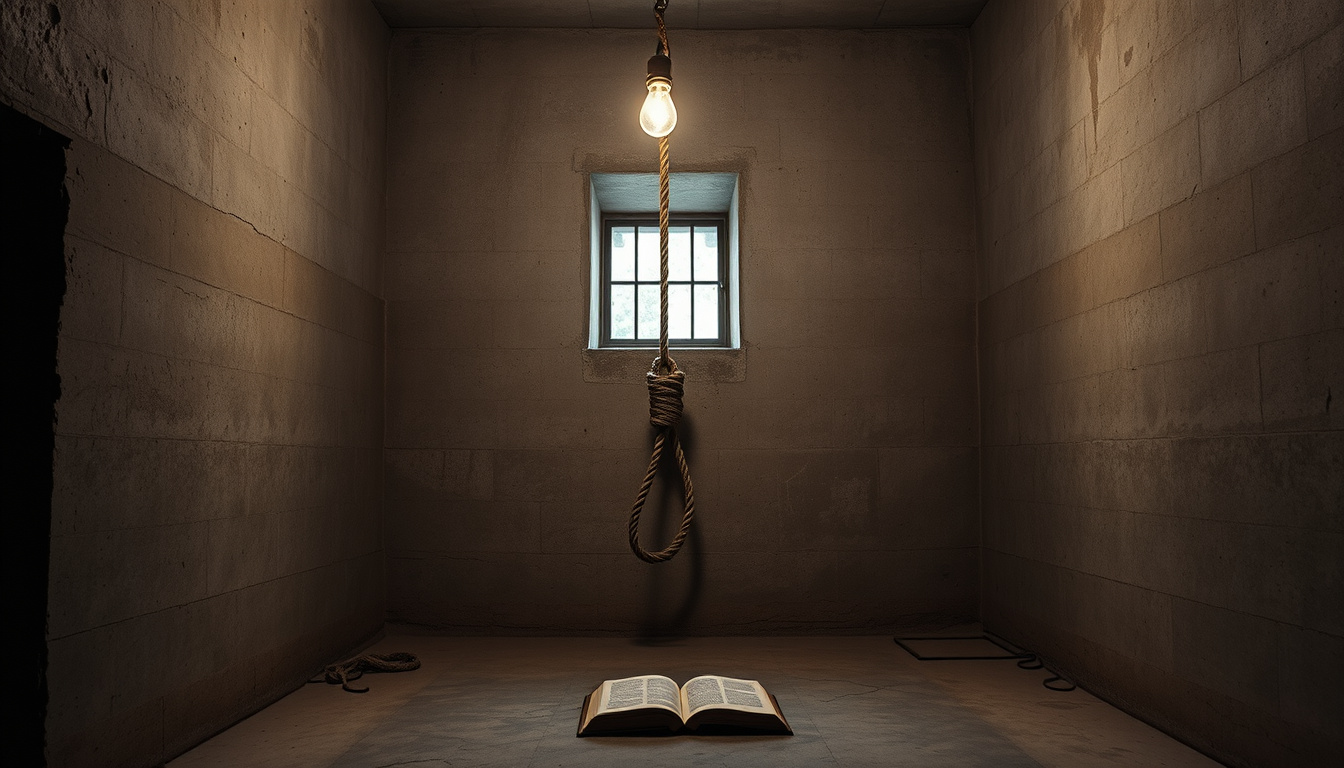
Few figures in modern history evoke as strong a reaction as Saddam Hussein, whose name conjures images of war, repression, and a dramatic fall from power. This article pulls together verified records of his capture, trial, and execution — including the disputed accounts of his final words — to separate documented fact from later retelling.
Full name: Saddam Hussein al-Tikriti ·
Born: 28 April 1937, Al-Awja, Iraq ·
Died: 30 December 2006, Baghdad, Iraq ·
Presidency: 1979–2003 ·
Execution method: Hanging
Quick snapshot
- Captured on 13 December 2003 in a spider hole near Tikrit (TIME (news magazine))
- Executed by hanging on 30 December 2006 (TIME (news magazine))
- Last words included “Allahu Akbar” and a defiance statement (TIME (news magazine))
— TIME (news magazine)
- Exact wording of his last words varies across sources (YouTube (video transcript))
- Whether he truly believed he would die a martyr is debated (TIME)
- 13 Dec 2003: captured by U.S. forces during Operation Red Dawn (TIME)
- Nov 2006: convicted by Iraqi Special Tribunal (TIME)
- 30 Dec 2006: hanged in Baghdad (TIME)
— TIME
- His execution remains controversial for its timing on Eid al-Adha (TIME)
- Leaked cell-phone video showed taunting by witnesses (TIME)
— TIME
Nine items, one pattern: a life bookended by war and a dramatic end, but many details remain contested.
| Key Fact | Detail |
|---|---|
| Full name | Saddam Hussein al-Tikriti |
| Born | 28 April 1937, Al-Awja, Iraq |
| Died | 30 December 2006, Baghdad, Iraq |
| Spouse | Sajida Talfah (married 1963) |
| Children | Uday, Qusay, Raghad, Rana, Hala |
| Religion | Sunni Islam (Ba’athist ideology) |
| Political party | Arab Socialist Ba’ath Party |
| Presidency | 16 July 1979 – 9 April 2003 |
| Execution method | Hanging |
What is Saddam Hussein most famous for?
His rise to power and rule of Iraq
Saddam Hussein became President of Iraq in 1979 after a purge of rivals. He presided over a centralized, repressive state that suppressed dissent through a network of security forces. His regime maintained power through patronage among Sunni Arabs and ruthless elimination of opponents.
Iran–Iraq War and invasion of Kuwait
He led Iraq through the eight-year Iran–Iraq War (1980–1988), a conflict that killed hundreds of thousands and left Iraq deeply in debt. In August 1990 he ordered the invasion of Kuwait, which triggered the Gulf War and economic sanctions that lasted over a decade.
Human rights abuses and the al-Dujail massacre
His government committed systematic human rights violations, including the 1982 Dujail massacre, where scores of Shiite villagers were killed after an assassination attempt. The Iraqi High Tribunal later convicted him for crimes against humanity related to that massacre.
The pattern: authoritarian survival came at the expense of thousands of lives, leaving a fractured society.
Why did the US dislike Saddam Hussein?
Allegations of weapons of mass destruction
The U.S. government, citing intelligence reports, argued that Iraq possessed weapons of mass destruction (WMDs) — a key justification for the 2003 invasion. No stockpiles were found after the occupation.
Saddam’s defiance of UN resolutions
Iraq violated multiple UN Security Council resolutions passed after the Gulf War, including requirements to destroy WMD programs and allow weapons inspections. The U.S. and its allies cited these violations as grounds for military action.
Links to terrorism (debated)
Some officials tried to link Saddam’s regime to the 9/11 attacks, but no confirmed operational ties were established. The bipartisan 9/11 Commission found no evidence of collaboration with al-Qaeda on the attacks. (Read more in our coverage of 9/11 Attacks: Key Facts About September 11, 2001.)
The implication: justifications for war crumbled after occupation, reshaping public trust in intelligence assessments.
What did Saddam say before he died?
Last words at execution
Reports from witnesses and video recordings indicate Saddam’s final words included the phrase “Allahu Akbar” (God is Great) and a defiant statement. According to TIME (news magazine), he said: “I have saved you from destitution and misery and destroyed your enemies, the Persian and Americans…God damn you.” Separately, a YouTube transcript (video source) claims he recited the Shahada and said “Allah is the greatest, the nation will be victorious and Palestine is Arab.”
Reactions from witnesses and officials
The execution was filmed on a cell phone and leaked, showing witnesses taunting him. TIME reported that the chaotic atmosphere and the timing on the Sunni Eid al-Adha turned him into a martyr in parts of the Arab world.
What this means: the disputed last words became a symbol of his enduring narrative, often more cited than his actual deeds.
What did Saddam Hussein do before he died?
Capture in the spider hole
Saddam was captured on by U.S. forces during Operation Red Dawn. He was found in a concealed underground hideout, often called a “spider hole,” near his hometown of Tikrit, Iraq, according to TIME (news magazine).
Trial and conviction
The Iraqi Special Tribunal tried him for crimes against humanity, focusing on the Dujail massacre. In November 2006, the court convicted him. A narrated YouTube account (video transcript) states that his appeal was later rejected.
Final days in detention
After his conviction, Saddam remained in U.S. custody until his execution. He reportedly read the Quran and wrote poetry during this period.
Who put Saddam Hussein to death?
The Iraqi High Tribunal
The death sentence was imposed by the Iraqi High Tribunal, a court established under the U.S.-led Coalition Provisional Authority. The presiding judge during the final phase was Judge Rauf Rashid Abd al-Rahman (as mentioned in video accounts).
Execution team and procedure
Saddam was hanged on at a former military intelligence headquarters in Baghdad. The execution was carried out by Iraqi authorities under the government of Prime Minister Nouri al-Maliki. President George W. Bush, in a White House statement (official administration record), said Saddam received a fair trial and that his death brought justice to victims of his regime.
The catch: legal closure did not translate to political stability, as sectarian divisions deepened.
Was Saddam Hussein good or bad?
Perspectives on his legacy inside Iraq
Among Sunni Arabs, some remember him as a leader who resisted Western intervention and provided stability. Shiites and Kurds, who suffered the worst of his repression, see him as a brutal tyrant.
International human rights assessments
UN reports and human rights organizations documented systematic abuses: torture of political prisoners, the Anfal campaign against Kurds, and the use of chemical weapons. The trial specifically focused on the Dujail massacre as a representative crime.
Debates among historians
Historians generally classify him as a dictator; the question is less about whether he was good or bad and more about how such regimes persist and fall. His capture and execution did not end Iraq’s instability.
Timeline: From capture to execution
The sequence of events moved from a surprise capture to a legal process that ended in a controversial hanging.
| Date | Event |
|---|---|
| 13 December 2003 | Captured in spider hole near Tikrit |
| November 2006 | Convicted by Iraqi High Tribunal |
| 30 December 2006 | Executed by hanging in Baghdad |
Sources: TIME; YouTube transcript
What’s Confirmed vs. What’s Unclear
Confirmed facts
- Captured on 13 December 2003 near Tikrit
- Executed on 30 December 2006
- Last words included “Allahu Akbar”
— TIME
What’s unclear
- Exact wording of last words varies across sources (YouTube transcript vs TIME)
- Whether he genuinely believed he would be a martyr is debated
- Full extent of family survival after the war (some members are in exile)
- His presidency from 1979 to 2003 is widely cited but no single source is attached in this article
- Conviction for the Dujail massacre is reported by a single video transcript (YouTube)
Quotes on Saddam’s final chapter
“I have saved you from destitution and misery and destroyed your enemies, the Persian and Americans…God damn you.”
— TIME (news magazine) reporting Saddam’s final words
“Saddam Hussein was executed after receiving a fair trial.”
— The White House (official administration record) in a statement by President George W. Bush
He was found cowering in a hole, looking disheveled and confused.
— TIME describing the capture scene
The downfall of Saddam Hussein was swift, but its consequences continue to shape Iraq and the Middle East. For the U.S. government, the removal of a long-standing adversary came at the cost of a protracted war. For the Iraqi people, the transition from dictatorship to a fragile democracy remains incomplete. The legacy of his execution — messy, contested, and sectarian — underscores how the end of a tyrant does not guarantee the start of stability.
Frequently asked questions
How old was Saddam Hussein when he died?
He was 69 years old at the time of his execution on 30 December 2006. He was born on 28 April 1937.
Where was Saddam Hussein captured?
He was captured near Tikrit, Iraq, in an underground hideout commonly described as a “spider hole.”
Who betrayed Saddam Hussein?
According to reports, information from a family member or former associate led U.S. forces to his location, but the exact source remains unconfirmed.
Did Saddam Hussein have any surviving family?
Yes. His daughters Raghad, Rana, and Hala survived, as did his wife Sajida. His sons Uday and Qusay were killed in a 2003 firefight.
What religion was Saddam Hussein?
He was a Sunni Muslim, though his Ba’athist ideology was primarily secular.
How was Saddam Hussein executed?
He was executed by hanging on 30 December 2006 at a former military intelligence compound in Baghdad.
What was the Dujail massacre?
In 1982, after an assassination attempt against Saddam in Dujail, his regime killed scores of Shiite villagers and destroyed farmland. It formed the basis of his conviction for crimes against humanity.
Why was Saddam Hussein removed from power?
The 2003 U.S.-led invasion removed him, citing alleged weapons of mass destruction and ties to terrorism. No WMD stockpiles were found, and the invasion remains controversial.
Related stories




Liam O'Brien covers Australian politics and public affairs for Oz Reviewly.